
White County Release Date Meanings
A single phrase can hide four different dates. The court imposes an undiminished sentence, which is the full sentence before credits and other rules are applied. Tennessee uses Release Eligibility Date, or RED, for the first statutory point at which a person may be considered for a release mechanism. Sentence expiration marks the legal end of the sentence calculation. Actual release is the physical exit from a particular facility.
These dates may not match. A person can reach RED without receiving parole. Someone granted parole may remain confined until the release plan is approved and other conditions are complete. A person can also leave White County Jail for TDOC, federal, another county, or ICE custody. That event ends county custody but is a transfer, not a community release.
- RED
- Release Eligibility Date, the first statutory threshold for consideration under the governing judgment and law.
- Sentence expiration
- The calculated end of the sentence, which is not the same as parole eligibility.
- Jail credit
- Credit for qualifying time already spent in custody, as recorded in the judgment and time computation.
- Detainer
- A basis for another authority to take custody after the current facility releases the person.
Find a White County Release Date
Start with the authority that computes or controls the date. White County Jail is the right source for a locally held person, the White County Circuit Court Clerk holds the judgment and later orders, and TDOC is the state timekeeper for a person in the Tennessee correctional system. FOIL is a useful public view, but it is not a complete county pretrial or misdemeanor release archive.
- Determine whether the person is pretrial, serving a local sentence, or in TDOC custody. Do not use the same calculation for all three.
- For a pretrial White County detainee, check the signed court order and ask the jail about bond, other charges, holds, and processing. There may be no sentence-based date.
- For a locally sentenced person, obtain the judgment and ask the White County jail records or timekeeper for the current calculation.
- For a state prisoner, search TDOC FOIL by name, TDOC ID, or State ID and read the exact sentence and release language shown.
- Ask TDOC to explain how the judgment, offense date, range, credits, and sentence structure produced the date when the public record is unclear.
- Register for a custody-event alert, then confirm the actual exit or transfer with the holding facility.
The FOIL search interface shows the available name and ID search routes.
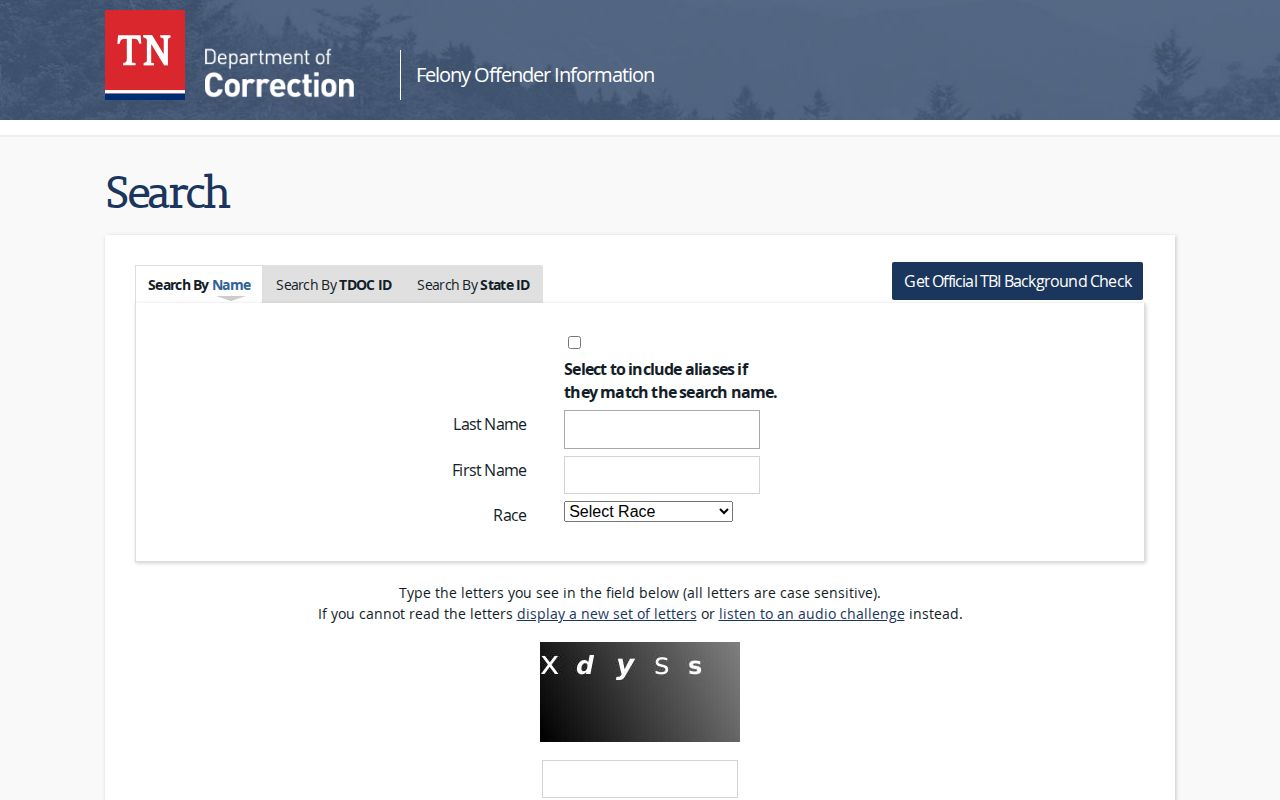
After matching the person, preserve the precise date label and status from the result rather than assigning a broader meaning to it.
Note: FOIL technical help is separate from the jail, court, or TDOC office that can explain the underlying time calculation.
White County FOIL Date Limits
The public FOIL landing page says that sentence and release information may be available. It does not promise a field literally labeled “Projected Release Date” or “Tentative Release Date.” Exact labels from a live person detail must be read as displayed. Tennessee’s verified legal term is Release Eligibility Date.
FOIL status also needs care. Incarcerated means confinement in prison or jail. Parole means supervision after incarceration. Probation is a supervised alternative to incarceration. Inactive means no longer under state supervision, but does not give the cause or date. Out on Bond means release pending more action. Furlough is temporary, not completed release.
| FOIL item | What it can establish | What it cannot establish alone |
|---|---|---|
| Status | The reported state custody or supervision category | The exact physical release time or destination |
| Location | The listed facility or supervision office | That no transfer or update lag exists |
| Sentence information | The state record used for the person’s term | A simple date without reading the judgment and statutes |
| Release information | The release data that TDOC chooses to display | A guaranteed field name or complete White County jail history |
| Inactive | State supervision has ended | Why it ended or whether every court duty ended |
White County Pretrial Release Timing
A person awaiting trial at White County Jail does not have a sentence-based release calculation. The next event may depend on bond, dismissal, a signed release order, or another court action. Even after a judge signs an order, physical exit can wait on jail processing or be blocked by another charge, warrant, or hold. The roster may also lag after departure.
Use the White County criminal court file to identify the signed order, not just a calendar line. The clerk’s online dockets separate General Sessions Criminal and Circuit Criminal matters and warn readers to check the Prepared Date because updates can be delayed. A docket locates the proceeding; the signed disposition or order is stronger proof of what the court directed.
Then call White County Jail and ask whether the order has been executed. If the person left, the permanent jail-register entry establishes the release date. When another authority assumed custody, the booking, census, or movement record may give the destination. This sequence answers when county custody ended without turning a transfer into a predicted community release.
For a local sentence, the judgment and jail timekeeper replace the pretrial path. Ask which sentence, jail credit, locally applicable release percentage, and other cases control the current calculation. Do not apply the state prison credit formula without confirming that it governs the person’s White County sentence.
Tennessee Eligibility for White County Cases
TDOC calculates RED under the judgment, Tenn. Code Ann. § 40-35-501, and the credit law that applies to the person. There is no sound statewide statement that all Tennessee inmates serve 85 percent. The controlling percentage depends on the offense, offense date, offender range, sentence, and statutory exceptions.
Section 40-35-501 contains ordinary eligibility percentages that include 20 or 30 percent for especially mitigated classifications as the judgment states, 30 percent for Range I, and 35 percent for Range II, with many exceptions. Some historic listed violent offenses used 100 percent less allowable credits capped at 15 percent, which produced the familiar 85 percent shorthand. Certain offenses committed on or after July 1, 2022 require 100 percent undiminished by credits. Firearm provisions can use other date ranges and floors.
The only safe approach is case-specific. Read the offense of conviction, offense date, classification, range, consecutive or concurrent structure, and the judgment. Then identify the statutory subsection that applies. A broad percentage calculator can produce a false White County release date because it ignores the very facts that select the governing rule.
The Tennessee Board of Parole FAQ explains RED and the separate roles in release decisions.
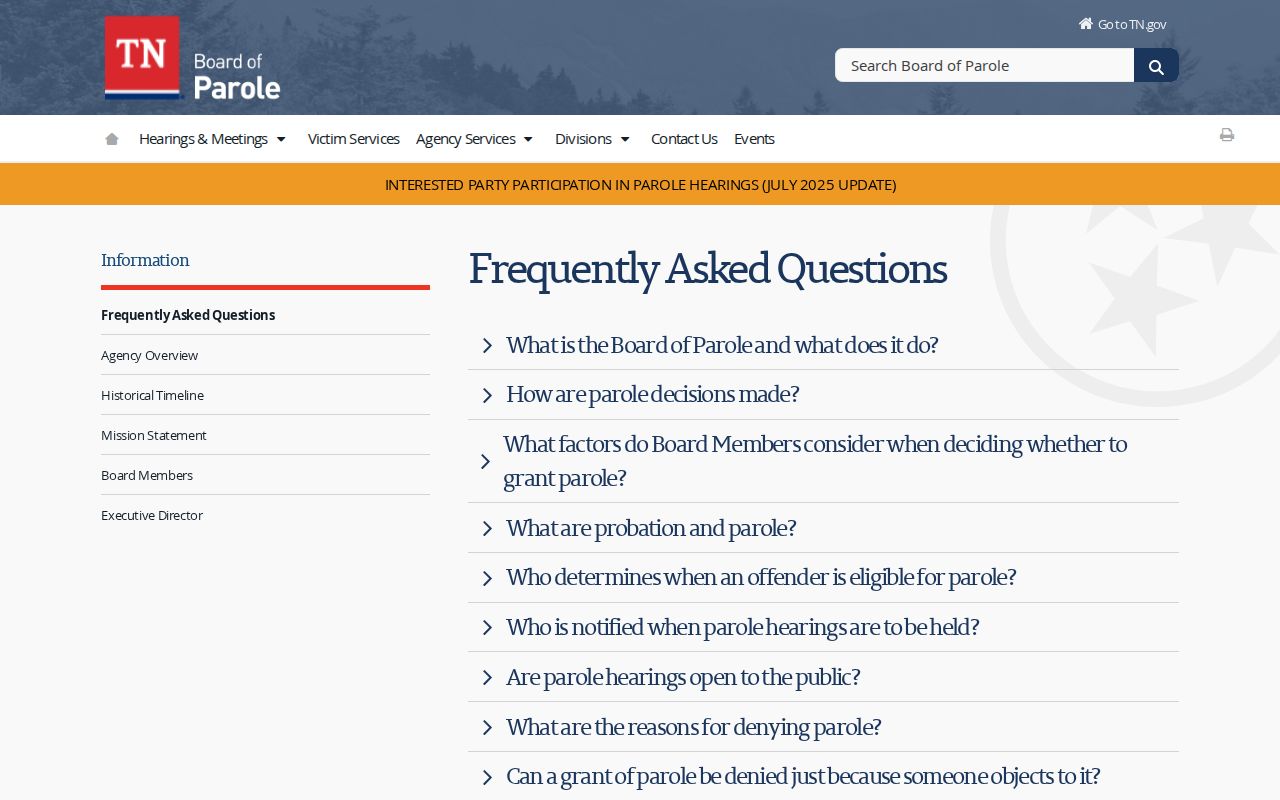
This official distinction keeps parole eligibility, a Board decision, and actual facility exit from being treated as one date.
Note: A hearing date or parole grant date does not replace the later record showing that the person physically left custody.
White County Sentence Credit Rules
Tenn. Code Ann. § 41-21-236 provides Tennessee’s state sentence-credit framework. It allows up to 1 through 16 days per month, including up to eight days for good institutional behavior and up to eight for satisfactory program performance. Credits must be documented. They are discretionary and reviewable, can be removed, and generally are not earned during the punitive or maximum-security conditions described by law.
Offense date and sentence length can change what the credits affect. For sentences under two years or offenses before July 1, 2024, credits can affect RED and sentence expiration. For offenses on or after July 1, 2024 with sentences over two years, the statute directs credits toward parole eligibility rather than sentence expiration. Two dates can therefore respond differently to the same earned credit.
Felony offenders housed locally can participate in the statutory framework. Local misdemeanants follow separate rules under which the court fixes a release percentage from 30 through 100 percent, subject to the statutory limit. Local and state credit systems cannot simply be stacked. White County’s timekeeper and the judgment are needed to determine the rule actually applied.
When White County Dates Diverge
The July 2024 sentence-credit change creates a distinctive computation problem. For a covered offense with a sentence over two years, credits can move parole eligibility without moving sentence expiration. A FOIL user who calls either value “the release date” can erase that legal difference.
Keep a small timeline for the case: judgment date and sentence, RED or other eligibility threshold, possible Board action, sentence expiration, and actual release. Add the offense date because it selects the statutory regime. When an amended judgment, restored credit, or new sentence changes a figure, record which agency made the change and when.
Can credits guarantee an earlier release? No. Eligibility may arrive sooner, yet the Board can deny parole, a release plan may remain unfinished, or another lawful hold can prevent community release.
Note: For covered post-July 2024 cases, parole eligibility and sentence expiration must remain separate entries in the White County timeline.
Changes to White County Release Dates
A future date is a current calculation, not a promise. The person can earn or lose credits, a court can amend a judgment, and another jurisdiction can place a hold. Parole affects the possible path out of incarceration but does not erase the sentence expiration date.
| Factor | Possible effect | Record to check |
|---|---|---|
| Earned sentence credits | May move eligibility and, for some cases, expiration | TDOC or local time computation |
| Credit loss or restoration | Can move a date later or earlier under the governing law | Institutional credit record |
| Amended court judgment | Can alter length, jail credit, or sentence structure | Signed court judgment |
| Consecutive cases | Can extend the combined time calculation | All controlling judgments |
| Parole action | Can permit supervised release after eligibility | Board decision and approved plan |
| Detainer or hold | Can turn facility release into transfer custody | Movement and receiving-agency records |
Administrative processing and data lag can also make two public systems show different moments. Report each agency’s supported status and lookup time. Do not select the more convenient date and call it final.
Confirm White County Actual Release
For White County Jail, call 931-836-2700 and ask whether the person is still housed, physically released, or transferred. The permanent jail-register entry gives commitment and release dates. The judgment or release order gives legal authority, while the movement record identifies another custodian when the person did not enter the community.
For TDOC, read the precise FOIL status, location, sentence, and release information, then contact TDOC when the calculation needs explanation. A White County VINELink Release Check can deliver an event alert, but the holding facility or TDOC release record still confirms the event. The White County release-record search explains how to request the county records when an online status is not enough.
Use the court file as a legal cross-check. A bond order, dismissal, sentence entry, or probation order may explain why release should occur, but the jail custodian confirms physical departure. Another charge, hold, or processing step may remain even after an order is signed.