
White County 72-Hour Release Fallback
No official White County source exposed a rolling 72-hour or three-day release list during research. The county-linked BluHorse endpoint is described only as a lookup for inmates housed in White County Jail. It has no verified weekend filter, release archive, update cadence, online retention period, or confirmed release-time field. The page was also inaccessible during the research session. That may change, but an unavailable current roster cannot be recast as a release history.
Call the White County Sheriff and Jail at 931-836-2700 for the date range. Ask whether existing register entries can be inspected or copied for the people and dates at issue. A broad demand to create a new “72-hour list” may ask the custodian to compile a report that does not exist. A focused request instead names the person, approximate booking period, and existing record series. The permanent jail register contains commitment and release dates. Movement records can show whether a person entered another custody system.
Check White County Three-Day Releases
Set the time span before calling or writing. Note the beginning and end dates, the last place the person was known to be held, and any case or booking identifier. That keeps a multi-day inquiry tied to existing records. It also helps distinguish a late roster update from a release that occurred earlier in the three-day span. For a same-day question, the narrower Released Last 24 Hours route may be faster.
- Confirm the official Tennessee source. Start at the Sheriff page and use the White County endpoint marked by agency ID WHITETN.
- Write down the exact three-day range and each person’s known identifiers. Save the time of any live roster check.
- Call 931-836-2700 and ask whether the jail can confirm custody, departure, or transfer for each named person during that span.
- Request the jail-register entry plus the judgment or release order. Add the booking, census, or movement entry if another agency may have received the person.
- Compare the county record with the signed court disposition. Use VINELink for a reported custody event and FOIL when TDOC custody or supervision is plausible.
This sequence prevents a three-day roster comparison from becoming a guess. One screenshot taken on Friday and another on Monday can show that a display changed. They cannot, by themselves, prove when the person left, why the person left, or whether another authority took custody. The official register and movement package answer those points.
White County Release Record Fields
Because White County’s live interface did not render, none of its display fields can be promised. A genuine 72-hour feed elsewhere might show a name, booking number, release time, reason, or photo. That does not establish that White County’s deployment shows any of them. The field table below is limited to official Tennessee record series that can support a three-day inquiry.
| Existing record | Useful field or fact | Limit |
|---|---|---|
| Permanent jail register | Name, offense, process, commitment date, and release date | Shows county departure, not always the next destination. |
| Judgment or release order | Legal authority for release | An order may precede physical processing. |
| Booking, census, or movement record | Movement chronology and possible receiving agency | Disclosure and available detail depend on the custodian. |
| Court disposition | Bond, dismissal, sentence, or probation action | A docket calendar is weaker than the signed record. |
| VINELink event | Participating agency’s reported custody change | Does not rule out a transfer, detainer, or second case. |
The CTAS retention schedule assigns permanent retention to the jail register and five years to booking, census, movement, and release-order series. White County’s custodian decides what exists and what can be released. The schedule supplies the correct record names without inventing an online field set.
The official CTAS source shown below gives the retention context for a White County three-day release request.
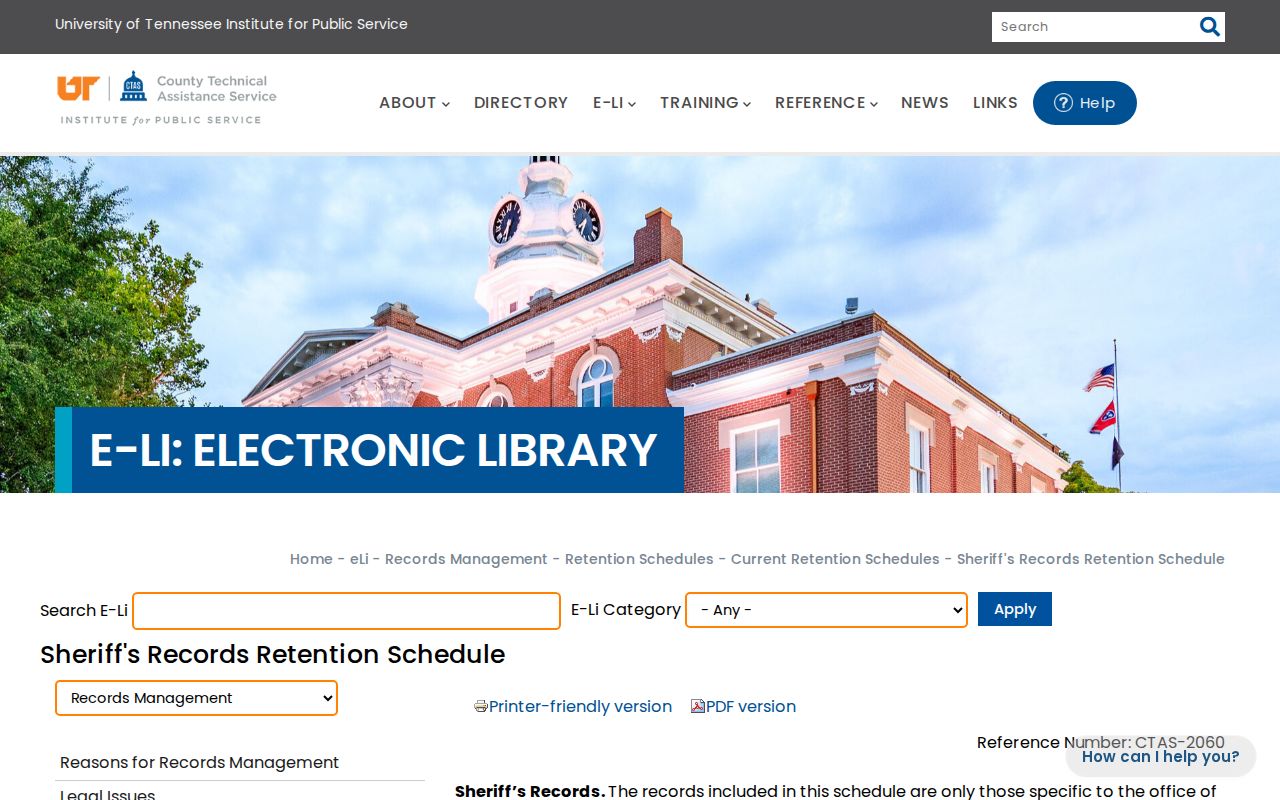
The lasting register is why an older event can still be checked after a temporary custody display changes.
Weekend White County Release Checks
A three-day range is useful when the desired dates cross a weekend or holiday. It can capture Friday through Sunday in one request, or any other defined span. White County did not publish a weekend processing rule, holiday release schedule, exit location, family waiting point, or known roster-lag interval. Those are questions for the jail. They must not be inferred from the fact that a person disappeared between two checks.
Keep legal action and physical departure separate. A court may sign a bond, dismissal, or probation order before jail processing is complete. A public docket can also lag because White County’s clerk tells readers to check its Prepared Date. Request the signed order from the Circuit Court Clerk, then compare it with the jail register’s release date. If another charge or hold remained, a favorable entry in one case may not have ended custody.
The wider window also creates more chances for a transfer to be mistaken for freedom. If TDOC FOIL reports an incarcerated status or another location, describe the county departure and the state status as separate dated facts. If the record points to federal or immigration custody, use that authority’s system. Do not let the three-day label blur agency boundaries.
Note: No published White County rule supports assuming that weekend releases appear on the next business day’s roster or in a later archive.
White County Release Roster Versus Register
White County’s current lookup and the permanent jail register serve different purposes. The web endpoint answers who is reported as housed. The register records commitment and release dates over time. No official online retention span connects the two. That local gap is the key reason a 72-hour page must begin with records access instead of presenting a guessed feed.
A missing live result is only a negative search result. Recheck the spelling and identifiers, and confirm the Tennessee endpoint. Search engines can lead to a similarly named Indiana sheriff. If White County’s endpoint is unavailable, note the failure time and move to direct contact. The outage itself says nothing about the person’s location.
The official White County Sheriff page shown below links the current roster and supplies the agency contact.
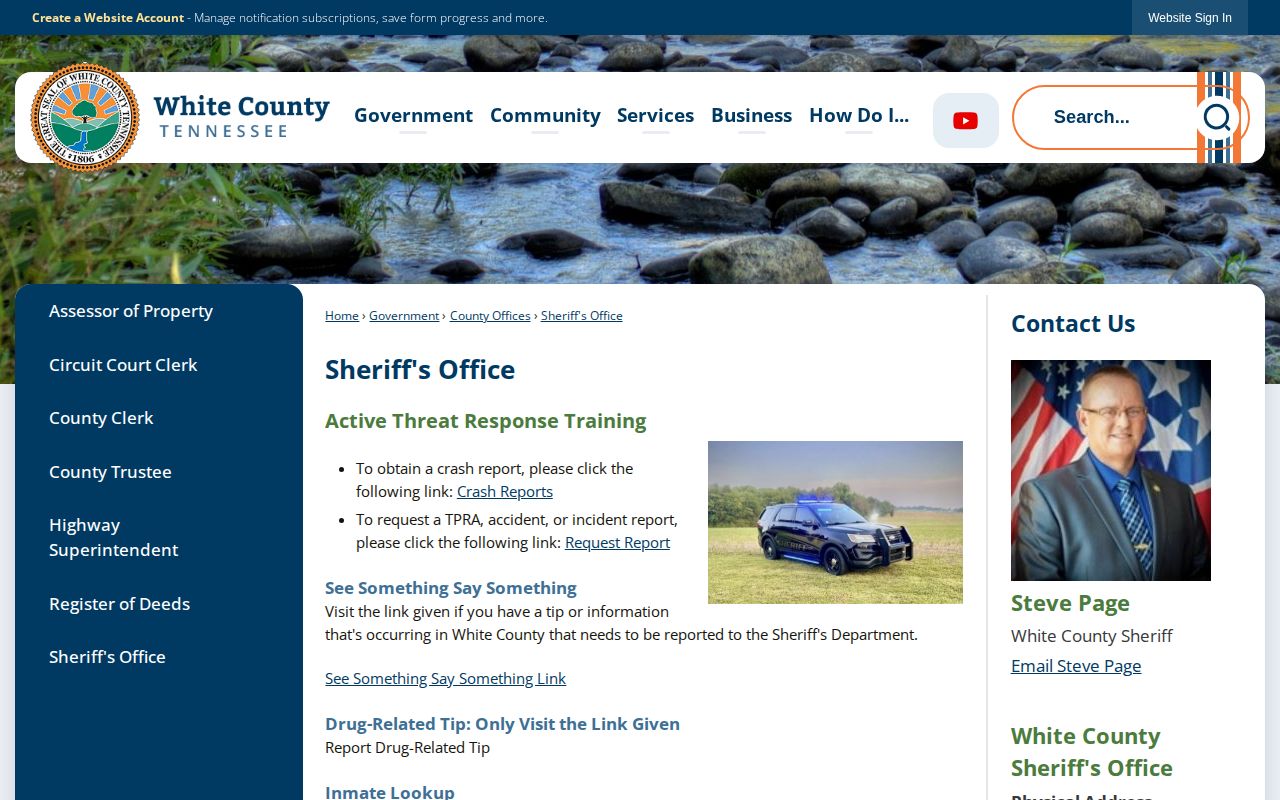
Its “housed in” language is the boundary: use it for current custody, then use the register for releases across the requested dates.
White County Release Cross-Checks
After the jail responds, use a second source that matches the claimed outcome. A bond, dismissal, sentence-completion entry, or probation order in the signed court file can support community release. TDOC FOIL can show whether a state sentence or supervision followed. Parole means release from incarceration under Board conditions and state supervision. Probation is court-ordered supervision and does not always imply a prior prison stay. “Inactive” means the person is no longer under state supervision, not a specific release type or date.
VINELink can add timely notice when a participating agency reports a custody event. It is not a universal certificate. Review the agency name and event wording, then ask whether the event was release on bond, sentence expiration, parole, transfer, or a detainer handoff. When federal sentenced custody is involved, a past BOP release date shows departure from BOP only. ICE and the U.S. Marshals Service require their own records paths.
- Community release
- The person leaves confinement without entering another agency’s physical custody, though court duties or supervision may continue.
- Transfer
- One custodian releases the person directly to another jail, prison, or authority.
- Detainer
- A hold or request that may cause another authority to receive the person when the first custody ends.
- Discharge
- An official end to a sentence or supervision status as shown by the controlling agency record.
White County Three-Day Confirmation
For a named person, keep a simple timeline. Record the last verified county roster match, the register release date, the order date, and any next-agency status. If timestamps conflict, report the source and lookup time rather than choosing the earliest result. Processing lag is common enough that a calendar, roster, and alert may not change together.
The strongest conclusion is narrow and sourced: White County custody ended on the register’s supported date, the signed order supplied the stated authority, and the movement record did or did not name a receiver. That language answers the three-day question without claiming more than the records prove. For a full one-person custody sequence, the White County release-record hub covers county, state, federal, and court routes.